
Do You Need an Asbestos Survey for Communal Areas in a Block of Flats?

Searches for asbestos survey communal areas block of flats usually come from freeholders, landlords and managing agents who need clear guidance before maintenance, contractor visits or resident queries become a bigger issue. If you are responsible for hallways, stairwells, meter cupboards, plant rooms or other shared parts of a residential building, an asbestos survey is often the practical starting point. It helps you understand what may be present, what condition it is in, and what action, if any, is sensible next.
At Metric Building Compliance, we support property owners and managers with clear, compliance-focused asbestos survey services. Based in Horley, we work across the South East and London and provide straightforward advice on the right survey scope for occupied communal spaces.
Do you need an asbestos survey for communal areas in a block of flats?
In many cases, yes. While individual flats are domestic spaces, the shared parts of a block are different because they are controlled, maintained and accessed as part of ongoing building management. That is why communal areas are often the first places a freeholder, right to manage company, housing provider or managing agent needs reliable asbestos information.
The aim is not to create alarm. The aim is to identify materials that may contain asbestos in the areas used by residents, visitors, cleaners and contractors, then manage any risk sensibly. If your block was built or refurbished before 2000 and there is no reliable asbestos information in place, arranging a survey is usually a sensible next step.
This is especially important where routine maintenance is taking place. Electricians, fire safety contractors, plumbers, decorators and general maintenance teams can all disturb ceiling voids, risers, boards, panels, pipe boxing and other building elements in communal areas without realising what is present.
Which communal areas are usually included?
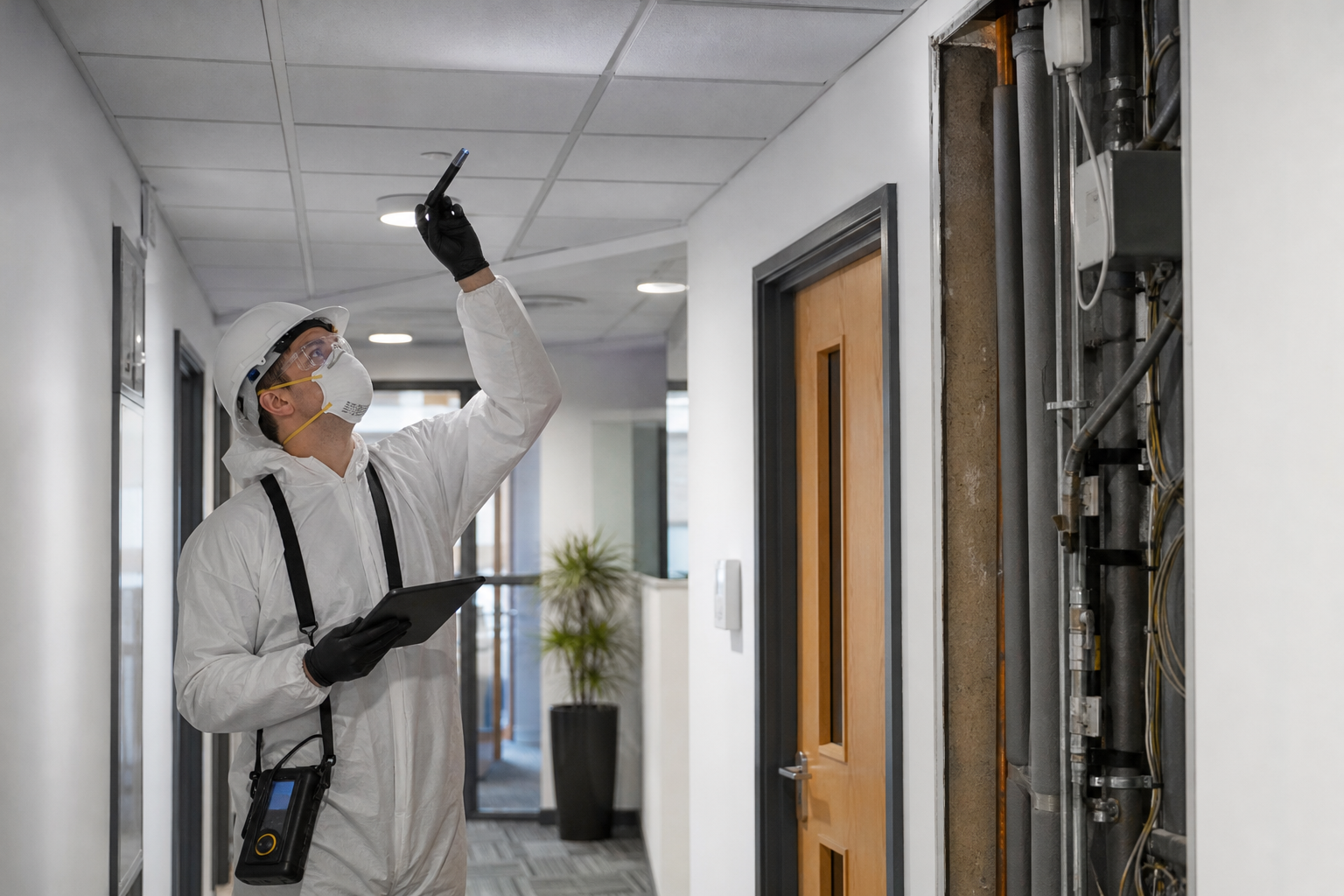
Depending on the layout of the building and the agreed scope, a communal area survey may include:
Entrance lobbies and reception areas
Hallways, corridors and stairwells
Lift lobbies and lift motor rooms
Basements and cellars
Boiler rooms, plant rooms and service cupboards
Meter cupboards and electrical intake rooms
Service risers and accessible roof voids
Bin stores, bike stores and shared outbuildings
Garages and other shared ancillary spaces
It does not automatically mean every private flat will be surveyed. The right scope depends on what areas you control and what information is already available.
What type of asbestos survey is usually needed?
For communal areas that are occupied and in normal day-to-day use, a management survey is usually the appropriate option. This type of survey is designed to locate suspected asbestos-containing materials in accessible areas, assess their condition and provide the information needed for ongoing management.
If you are unsure which survey is appropriate, we can help you define the right approach before work starts through our management survey advice.
When a management survey is usually the right choice
You need asbestos information for shared areas that remain in normal use
You want an asbestos register for communal parts of the building
Contractors will be carrying out routine maintenance or minor works
You have taken over management and inherited incomplete records
You want a clearer basis for future re-inspection and risk management
When a refurbishment and demolition survey may be needed instead
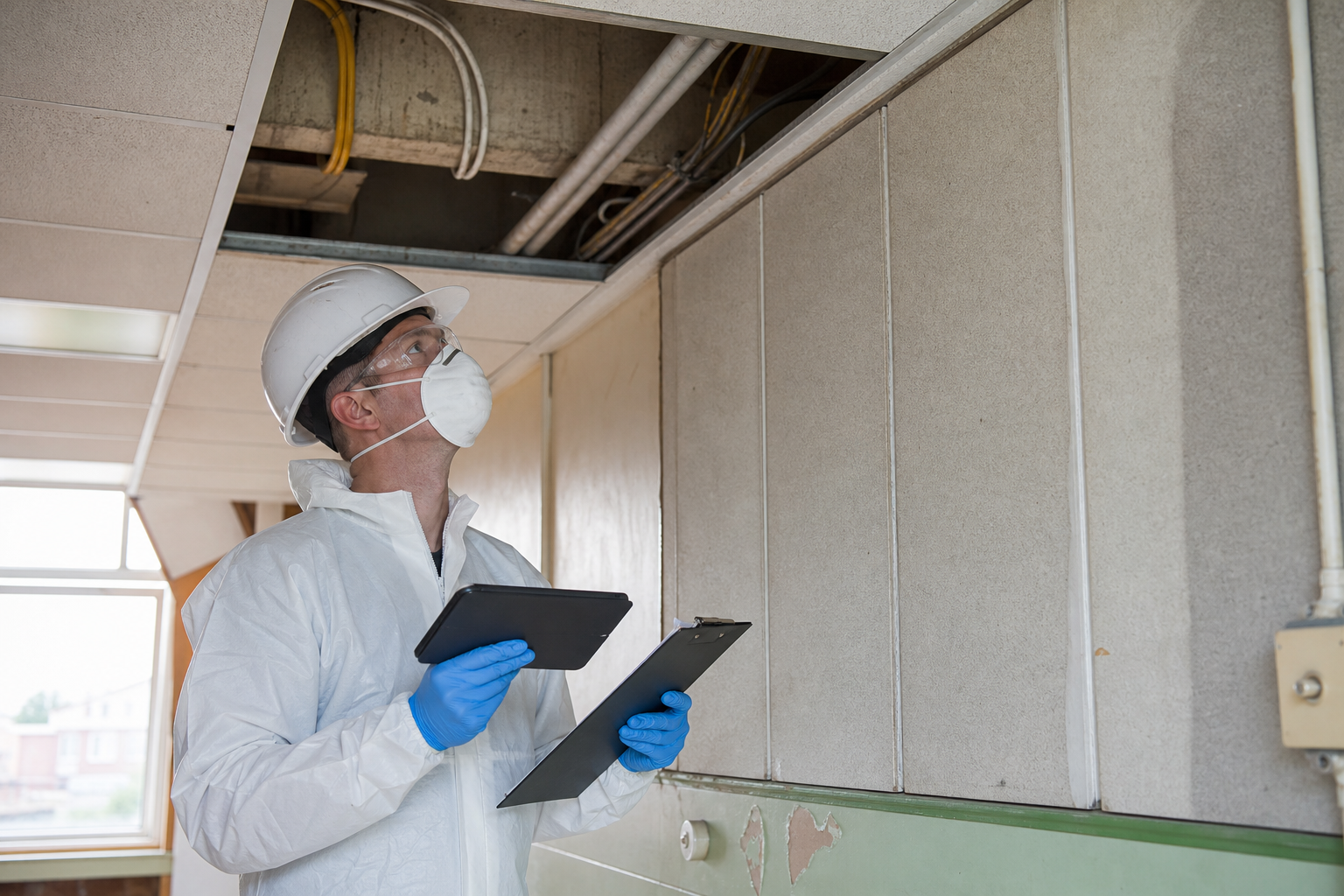
If planned works will disturb the building fabric, a more intrusive survey may be required in the specific area affected before work begins. This often applies where the project goes beyond routine occupation and maintenance.
Replacing corridor ceilings or opening up boxed-in services
Altering plant rooms, risers or roof spaces
Upgrading fire doors where surrounding materials may be disturbed
Removing finishes, partitions or old service insulation
Major refurbishment of shared parts before contractors start on site
In practice, some buildings need both types of survey at different times: a management survey for ongoing occupation and a refurbishment survey for specific planned works.
When should you arrange a communal area survey?
Timing matters. Many enquiries only happen after a contractor finds a suspect board or ceiling panel, which can cause delay, confusion and avoidable cost. In most cases, it is better to arrange the survey before that point.
You should consider a communal area survey if:
You have no current asbestos register for the shared parts of the building
The existing report is old, limited or does not cover all communal spaces
The block was built or refurbished before 2000
There is visible damage to boarding, insulation, textured coatings or pipe boxing
Routine maintenance contractors need access to service areas
You are planning cyclical works, upgrades or repairs in communal areas
Residents or leaseholders are asking for clarity on asbestos information
For freeholders and managing agents, early action is usually the better option. It gives you clearer information for contractor control, maintenance planning and resident communication.
What happens during a communal area asbestos survey?
A well-scoped survey should be practical, clear and proportionate to the building. At Metric Building Compliance, we aim to make the process straightforward from the outset.
Scope agreed - We confirm which communal areas are included, any access arrangements and whether the aim is ongoing management or support for planned works.
Site inspection - Accessible shared areas are inspected for materials that may contain asbestos.
Sampling where appropriate - Where needed, samples can be taken to help identify suspect materials.
Assessment of condition - We consider the material's condition, location and the likelihood of disturbance.
Clear reporting - You receive a report designed to help with practical management decisions.
Our reports are clear, detailed and comprehensive, with a full register of asbestos-containing materials where identified or presumed, marked-up plans and supporting photographs. If additional confirmation is needed, we can also advise on asbestos testing and sampling as part of the wider process.
What if asbestos is found in communal areas?
Finding asbestos does not automatically mean everything must be removed straight away. In many buildings, the right approach depends on the material, its condition and the likelihood of it being disturbed.
Typical next steps may include:
Recording the material in the asbestos register
Managing it in place if it is in sound condition and unlikely to be disturbed
Repairing, sealing or protecting damaged areas where appropriate
Setting a re-inspection programme for ongoing monitoring
Arranging removal if condition, access or planned works make that necessary
This is where a clear survey report matters. It helps you avoid overreacting, but it also helps you avoid underestimating a genuine issue in a busy shared part of the building.
Why property managers choose Metric Building Compliance
Communal area surveys need more than a tick-box approach. Freeholders and managing agents need practical information they can actually use when instructing contractors, planning maintenance and answering resident questions.
Metric Building Compliance is based in Horley and works across the South East and London. We undertake surveys across domestic, commercial and industrial property types and keep health and safety at the core of how we operate.
Free quotes and straightforward guidance on the right survey scope
Clear reports with registers, marked-up plans and supporting photographs
A quality-managed, compliance-focused approach
Public liability insurance for added reassurance
Support for wider property compliance needs, including fire risk assessment and fire door inspection services
If you need a survey that is clear, proportionate and easy to act on, you can request a free quote from Metric Building Compliance and get advice tailored to your building.
Frequently asked questions
Do communal hallways and stairwells in a block of flats need an asbestos survey?
They often do if there is no reliable asbestos information already in place, especially in older buildings or where contractors may disturb the fabric of the shared parts. A communal area management survey is commonly the starting point for occupied buildings.
Do I need access inside every flat for a communal area asbestos survey?
Not usually. A communal area survey is focused on the shared parts you manage and control. Access inside private flats may only be relevant if the agreed scope extends beyond communal areas or if specific planned works require it.
Can residents stay in the building during the survey?
In many cases, yes. Management surveys are commonly arranged around occupied buildings and shared spaces. The exact arrangements depend on the areas being inspected and whether any specific access restrictions are needed for safe sampling.
How often should communal areas be checked again?
That depends on what is found, the condition of the material and how likely it is to be disturbed. Where asbestos is identified or presumed, a re-inspection programme may be recommended so records stay current and risks are kept under review.
Is an old asbestos report enough for a block of flats?
Not always. If the report is outdated, limited in scope, missing communal spaces or no longer reflects the condition of the building, it may not be sufficient for current management needs. An updated survey can give you clearer and more usable information.
Conclusion
If you are responsible for a block of flats, the shared areas are often where asbestos information matters most. Hallways, stairwells, service cupboards and plant rooms are the places most likely to be accessed during routine building management, maintenance and contractor work.
A properly scoped survey gives you the clarity needed to manage risk sensibly, plan work with fewer surprises and keep better control of compliance responsibilities. If you need advice on an asbestos survey for communal areas in a block of flats, get in touch with Metric Building Compliance for a free quote and clear guidance on the right survey scope for your building.
Comments